 English
  Spanish
  Japanese
  French
  Dutch
Dutch  Portuguese
  German
  Russian
No products in the cart.

Fall Candle Scents: Sourcing & Assortment Retail Guide
For independent boutique owners and event designers, selecting the right fall candle scents is an operational inventory decision rather than a matter of personal preference. Over-indexing on heavy cinnamon profiles frequently leads to discounted residual stock in November, while overly intense fragrances can disrupt dining environments.
Building an effective seasonal display requires stocking products that engage retail shoppers at the shelf while ensuring clean, steady dispersion in residential and event spaces.
While our published Fall Candle Sourcing Guide outlines candle formats, vessel styles, and freight planning, this guide focuses entirely on fragrance curation. Below is a structured approach to evaluating fragrance profiles, planning shelf allocations, and placing seasonal wholesale orders.
How Fall Fragrances Work: Top, Heart, and Base Notes
A well-formulated candle releases aromatic compounds sequentially as the wax warms:
- Top Notes: The initial impression. Light, volatile components such as orange peel, fig leaf, or fresh ginger are detected immediately when a customer removes the lid in a retail environment.
- Heart Notes: The core theme. These elements—including spiced pumpkin flesh, crushed clove, orchard pear, and warm honey—begin to disperse as the melt pool establishes itself.
- Base Notes: The lingering foundation. Heavier notes such as cedarwood, dark amber, vanilla bean, and birch smoke settle into the room, grounding the blend and providing longevity.
Combining distinct top, heart, and base notes creates balanced autumn scented candles that deliver an evolving sensory experience throughout their burn cycle.
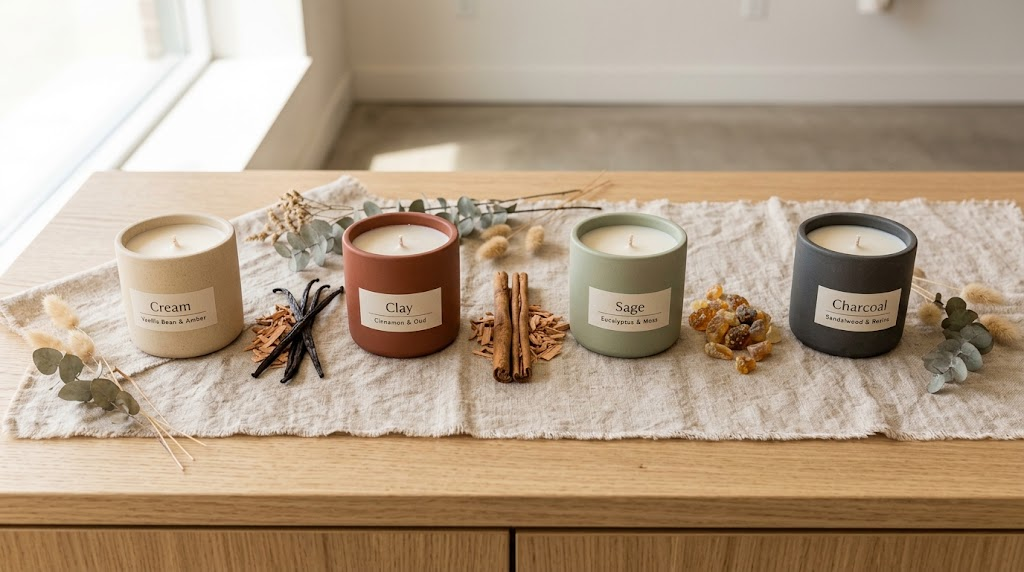
Sourcing Fall Candle Scents: 4 Core Fragrance Families
o keep display presentations cohesive and avoid redundant inventory, group seasonal orders across four recognized fragrance directions:
Profile 1: Pumpkin & Warm Spice (Traditional Baseline)
- Key Notes: Pumpkin flesh, cinnamon bark, clove bud, and nutmeg.
- Scent Profile: Warm, spiced, and familiar.
- Retail Application: Caters to standard seasonal foot traffic. While traditional pumpkin candles satisfy mainstream consumer expectations, formulations that balance spice with smooth vanilla bean notes offer a refined option suitable for specialty gift shops.
Profile 2: Bourbon Vanilla & Sweet Tonka (Warm Gourmand)
- Key Notes: Madagascar vanilla, toasted tonka, light butter notes, and mild chai.
- Scent Profile: Sweet and comforting without excessive heaviness.
- Retail Application: Suited for gift displays and register placements. A balanced vanilla scented candle appeals to shoppers who prefer non-spiced home fragrance and remains relevant through late autumn and into the winter holiday season.
Profile 3: Orchard Harvest: Apple & Spiced Pear (Early Transition)
- Key Notes: Gala apple, bartlett pear, crisp fig leaves, and light white woods.
- Scent Profile: Fresh, crisp, and fruit-forward.
- Retail Application: Designed for late August and September rollouts. Crisp apple scented candles provide an immediate seasonal transition while outdoor weather remains warm, and they serve daytime outdoor events effectively.
Profile 4: Smoked Cedarwood & Earthy Amber (Boutique Specialty)
- Key Notes: Virginian cedar, warm amber resin, vetiver, and sheer woodsmoke.
- Scent Profile: Grounded, dry, and gender-neutral.
- Retail Application: Suited for design-led gift shops and lifestyle boutiques. This profile caters to customers seeking understated interior ambiance over food-inspired aromas, fitting minimalist store aesthetics.
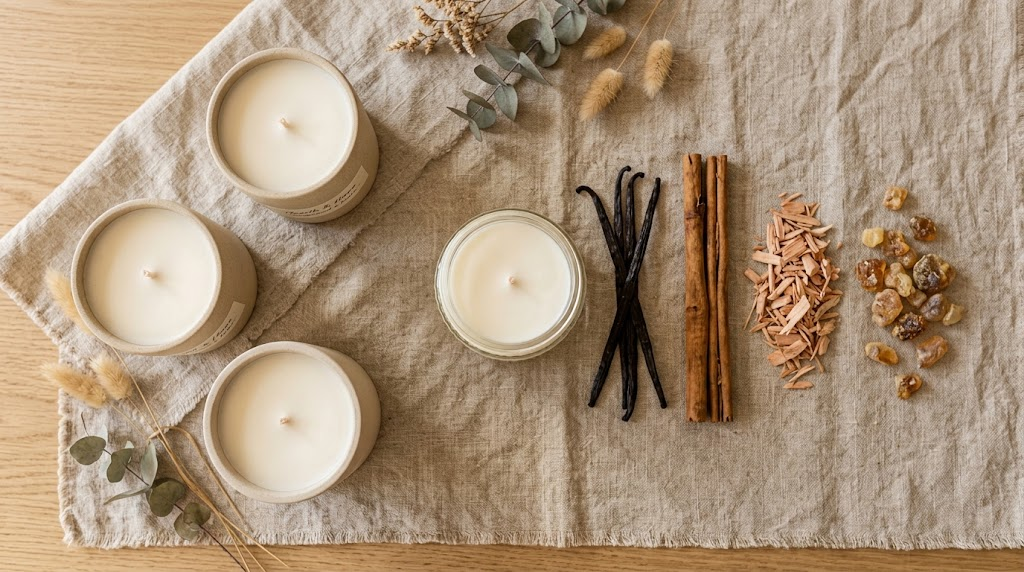
Beyond Scent: Unscented Candles for Fall Events & Dining Tablescapes
| Setting | Primary Functional Need | Recommended Candle Option |
|---|---|---|
| Boutique Gift Table | Shelf presence and unlit cold throw | Scented ceramic tumblers and ribbed glass jars |
| Formal Dining Tablescape | Ambient illumination and height without aroma interference | Unscented smooth tapers and pillar candles |
| Reception Lounge & Entry | Welcoming seasonal mood and ambient background diffusion | Subtle cedarwood or light amber jars |
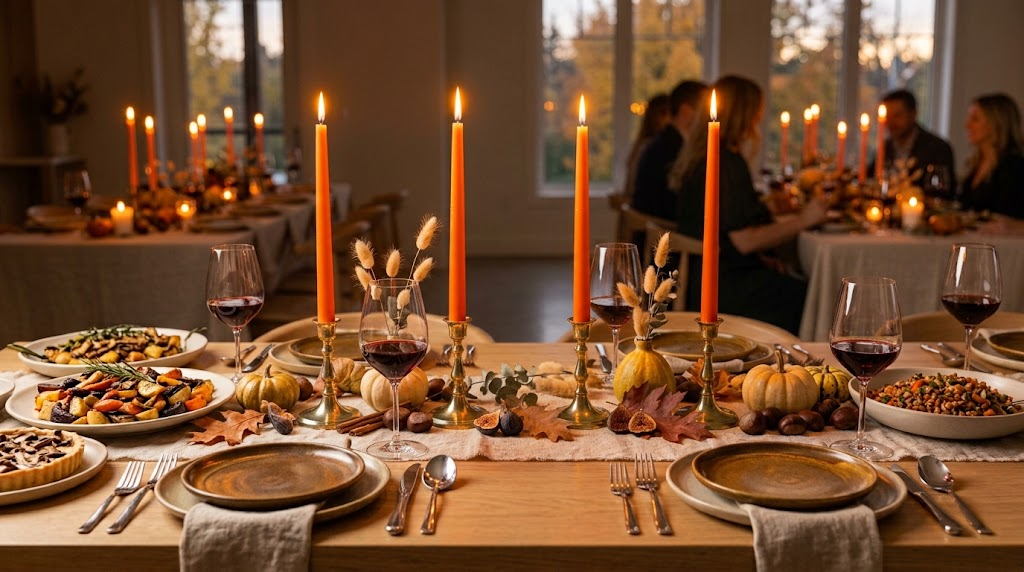
During seated meals, autumn banquets, and reception meals, heavily fragranced candles can interfere with culinary and wine aromas. Clinical sensory research from the Monell Chemical Senses Center demonstrates that the olfactory system directly dictates flavor perception—meaning intense cinnamon or heavy spice at the table actively alters how guests taste their meal.
For formal tablescapes, event designers utilize fragrance-free taper candles and solid pillars. These options provide visual height, warmth, and table movement without introducing competing aromas into the dining area. When sourcing unscented inventory, ensure that wicks are lead-free cotton and that wax blends are engineered to burn cleanly without dripping onto linens.
4. Cold Throw vs. Hot Throw: How to Evaluate Samples
When auditing pre-production samples from a manufacturing partner, assess fragrance delivery across two distinct operational stages:
Cold Throw: Unlit Shelf Assessment
- Aroma Clarity: Confirm that the fragrance profile is clean, distinct, and identifiable immediately upon opening the vessel.
- Surface Condition: Inspect the wax surface. While mild surface sweating can result from transit temperature fluctuations or oil-wax incompatibility, significant oil pooling generally indicates that the fragrance load exceeded the wax base’s saturation threshold.
Hot Throw: Diffusion and Burn Characteristics
- Room Dispersion: Observe whether the aroma disperses consistently throughout the space once a full melt pool is established.
- Aroma Balance: Verify that the fragrance maintains its intended character during extended test burns rather than becoming acrid or synthetic.
- Flame Cleanliness: Check that the wick supports a steady, upright flame without carbon mushrooming, excessive curling, or soot generation.
When sourcing strong scented candles, prioritize balanced formulation and clean wicking over raw oil concentration to ensure reliable burning performance.
5. Scent Assortment Framework: The 60/30/10 Allocation
For retail buyers establishing seasonal orders without past store sales data, the 60/30/10 ratio provides a structured baseline for scented inventory:
- 60% Traditional Anchors: Pumpkin spice, spiced apple, and harvest pear profiles that meet baseline seasonal demand.
- 30% Warm Gourmands: Vanilla tonka, chai, and subtle bakery accords that serve as gifting options and register display items.
- 10% Boutique Specialty: Smoked cedarwood, dry amber, and earthy fig blends that support an elevated product assortment.
Note: Allocate unscented dinner tapers and pillar candles under a dedicated hospitality and event inventory budget rather than combining them with scented container lines.
6. Seasonal Rollout Windows for Retailers
Introducing heavy holiday fragrances in late summer can result in mid-season display fatigue. Phasing your fall candle scents across specific delivery windows maintains customer interest:
| Timeline | Fragrance Focus | Merchandising & Display Context |
| Late Aug – Sept (Early Fall) | Crisp orchard apple, spiced pear, green fig | Neutral ceramics, linen textiles, fresh greenery |
| October (Mid Autumn) | Spiced pumpkin, clove, warm amber | Terracotta vessels, fluted amber glass, harvest accents |
| November (Late Fall / Entertaining) | Bourbon vanilla, dark woods, unscented tapers | Brass accents, rich glassware, formal dinner tablescapes |
Sourcing Your Seasonal Collection
If you are planning an upcoming seasonal line of bulk scented candles, contact the Oenus Deco team to request autumn wax samples or discuss private-label production timelines.
Frequently Asked Questions
What are the most popular fall candle scents for retail stores?
Traditional options like pumpkin spice and spiced orchard apple remain widely recognized choices that align with seasonal customer expectations. For boutiques seeking variety, warm vanilla gourmands and balanced cedarwood-amber profiles provide accessible, complementary alternatives for autumn retail displays.
What are the best candle scents for autumn boutique displays?
The ideal selection depends on store aesthetic and customer preferences. Warm wood and amber notes often suit minimalist, design-led shops, while comforting vanilla or harvest fruit notes serve as versatile options across diverse gift and home decor settings.
What scent profiles work best for fall dining and formal events?
For seated dinners and receptions, fragrance-free tapers or very light botanical notes are practical choices to avoid competing with food and beverage aromas. Subtle warm notes like soft amber can work well in reception areas or lounge spaces.
What should buyers evaluate when sourcing wholesale scented candles?
Buyers can evaluate both cold throw for unlit shelf appeal and hot throw during test burns. Reviewing sample batches helps ensure the candle burns cleanly, maintains aesthetic surface quality, and performs consistently in the intended commercial space.
