 Russian
  English
  Spanish
  Japanese
  French
  Dutch
Dutch  Portuguese
  German
В корзине нет товаров.

Luxury Home Fragrance Trends: Why Scented Candles Dominate Modern Interiors
A five-star hotel smells memorable because a single, intentional fragrance profile flows through the entire property. That consistency defines the modern luxury home fragrance sector: delivering a high-end, cohesive ambient experience. For retail boutiques, this trend unlocks a massive commercial advantage—allowing you to command premium retail margins that mass-market brands cannot touch. Here is the blueprint for what makes a home fragrance line genuinely luxurious, and how independent brands can launch a high-margin collection safely.
Luxury Scent Used to Be Exclusive. Not Anymore.
Complex note layering, artistic vessels, and verified non-toxic raw materials were once reserved for heritage houses. Today, these manufacturing capabilities are fully accessible to growing boutiques sourcing strategically.
Investing in a premium-positioned collection directly drives revenue. High-end home fragrance items excel as year-round corporate and retail gifts, secure excellent customer retention, and encourage multi-item purchases. More importantly, a documented, high-quality product line gives independent retailers a defensible edge over big-box stores if a consumer or regulator requests ingredient transparency.
How Luxury Brands Build a Memorable Scent Identity
Scent is hardwired to human memory and repeat purchasing behavior. To translate this psychological connection into retail success, premium hospitality lines reject scattered seasonal profiles in favor of a unified fragrance family applied across multiple formats. To guarantee complex scent stability and consumer safety across volume production, premium sourcing relies on strict adherence to the International Fragrance Association (IFRA) safety standards to govern manufacturing purity. Adopting this strategy means curating a tight, signature fragrance narrative across your collection rather than cluttering your inventory with unrelated scent profiles.
What Makes a Luxury Candle Worth Stocking?
Three distinct operational metrics separate high-end wholesale inventory from standard mass-market items: vessel longevity, fragrance complexity, and sourcing heritage.
The Vessel Is the Real Signal
Premium home fragrance houses avoid thin, disposable jars. They utilize heavy glass, fine porcelain, or custom-finished matte ceramics designed to outlive the wax and be permanently upcycled as premium home decor pieces or elegant interior ornaments. If a vessel cannot function as a standalone design object unlit on a boutique shelf, it will not support a premium retail markup.
Procurement tip: Always request a physical vessel sample before locking in your production run. Static spec sheets and factory photographs cannot accurately show true wall thickness, weight, or glaze consistency.
Fragrance Should Change as It Burns
Mass-market products rely on flat, single-note synthetic oils that smell identical from the first light to the last burn. Conversely, a premium fragrance throw unfolds dynamically in layers: opening with a crisp top note upon lighting, settling into a rich heart note, and anchoring the room with a deep base note (such as amber, precious woods, or clean musk) as the wax pool deepens.
Because factories frequently hand-pour optimized prototypes to secure business, verifying this burning complexity requires a smart sourcing workflow.
Procurement tip: Insist on testing samples pulled directly from an active, calibrated production line rather than a showroom prototype. Mass-manufacturing environments are where batch-to-batch fragrance loading and scent throw variances actually show up.
Origin Is Its Own Kind of Premium
High-margin collections leverage heritage or geographic storytelling. Whether a line utilizes hand-blown glassware modeled on historical patterns or incorporates botanical resins harvested from specific global regions, the narrative behind where your materials originate directly drives perceived consumer value.
Procurement tip: If a manufacturer claims single-origin ingredients or artisanal heritage, demand formal compliance certificates and raw material origin documentation in writing before issuing a deposit.
One Scent Family, Four Formats
Experienced retail buyers maximize average order value (AOV) by cross-merchandising matching fragrance profiles across different functional formats:
- Scented Candles: Act as premium visual centerpieces and establish immediate evening atmosphere in living rooms and dining spaces.
- Luxury Home Fragrance Diffusers: Handle low-maintenance, continuous ambient scenting required for entryways, bathrooms, and corporate offices.
- Room Sprays: Offer an instant environmental refresh, serving as excellent impulse purchases at checkout counters.
- Aromatic Incense: Targets the high-growth mindfulness demographic, where the daily ritual of lighting is valued as highly as the fragrance itself.
Why Japandi Interiors Dictate Modern Scent Sourcing
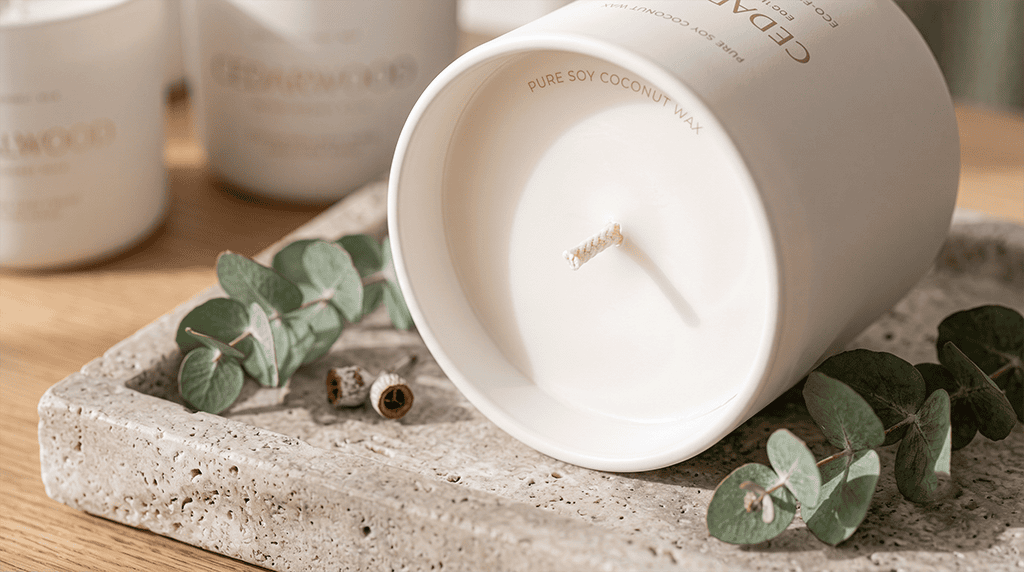 For modern retail buyers, the dominant shift toward Japandi (Japanese-Scandinavian) minimalism is a critical sourcing directive, not just an aesthetic trend. Japandi interiors focus on light oak, muted Morandi tones, and completely uncluttered surfaces. In a crowded room, ornate packaging disappears; in an uncluttered Japandi space, every item is exposed.
To hold up on a modern shelf, candles must prioritize matte ceramic finishes over glossy glass, muted tones over loud branding, and raw tactile textures over cheap surface printing. Sourcing vessels that read as considered sculptural objects ensures your collection blends seamlessly into premium spaces, justifying its luxury price tag.
Luxury vs. Mass-Market Home Fragrance
| Attribute | Mass-Market Home Fragrance | Luxury Home Fragrance |
|---|---|---|
| Vessel Quality | Plain, thin machine glass jars | Porcelain, matte ceramic, or hand-finished glass |
| Wax Formula | Low-cost paraffin blends | Natural soy and coconut wax blends, hand-poured |
| Scent Architecture | Single-note, flat synthetic oils | Multi-layered top, heart, and base notes |
| Packaging Asset | Flimsy printed folding cardboard | Rigid gift boxes, custom tissue paper, premium unboxing |
| Transparency | Proprietary/undisclosed ingredients | Fully disclosed, non-toxic formulations |
| Retail Pricing | $8 – $15 USD | $35 – $60+ USD |
| Minimum Order (MOQ) | 300 – 500+ units per SKU | As low as 100 units via flexible private-label catalogs |
| Primary Placement | Mass merchant / big-box retail shelves | Independent boutique, luxury hospitality, premium gifting |
“Luxury” and “Non-Toxic” Are Now the Same Conversation
Premium consumers no longer separate prestige from health. Sourcing a collection built on undisclosed petroleum-derived paraffin blends poses a massive risk to your retail brand’s reputation. Modern buyers demand clean-burning verification. For an absolute technical breakdown of botanical wax behaviors, safe wick choices, and identifying genuine factory compliance, review our comprehensive sourcing manual: Eco-Friendly Wholesale Candles: The Ultimate Buyer’s Guide for Sustainable Brands.
The Packaging Sells It Before the Candle Is Lit
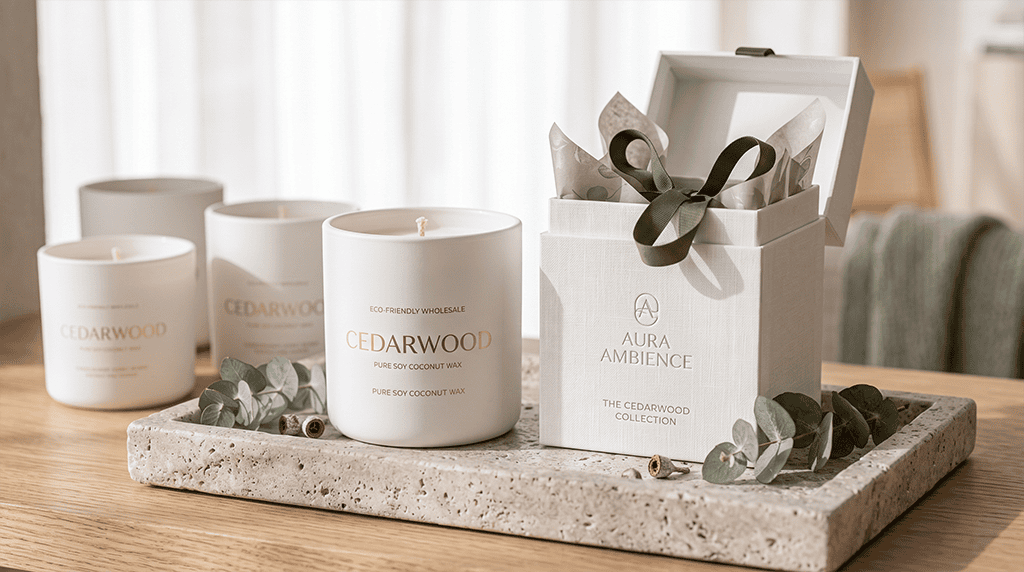 Flimsy cardboard packaging immediately undercuts premium pricing. Conversely, a structural, well-engineered rigid box establishes instant retail value before a customer ever experiences the fragrance throw. Investing in premium unboxing assets allows boutiques to maximize margins using existing product formulas. To review structural box styles, protective drop-testing engineering, and flexible B2B low-MOQ branding options, explore our strategic guide: Custom Candle Packaging Ideas That Drive Retail Sales.
Procurement tip: Order a fully packaged production sample and run a transit drop-test within your local delivery network before releasing final packaging deposits.
How to Test a Luxury Line Without Financial Risk
White Ceramic Over Glass
Standard glass containers lack visual distinction and carry higher breakages during international shipping. Matte white ceramic vessels offer an immediate premium touch, align perfectly with current Japandi interior design demands, and dramatically reduce ocean freight breakage rates—protecting your bottom line when importing bulk container shipments.
100 Units Is Enough to Start
You can launch a competitive retail line without massive upfront tooling investments. By private-labeling your brand onto a manufacturer’s pre-existing premium ceramic molds and utilizing stock structural boxes, production runs can begin at just 100 units. This low-MOQ structure allows independent boutiques to test high-margin home fragrance lines safely before investing in large-scale seasonal catalog expansions.
Build Your Private Label Collection with Confident Sourcing
Launching a premium fragrance collection should not involve supply chain guesswork or excessive capital risk. Whether you are selecting white ceramic vessel textures, analyzing structural box safety, or finalizing custom fragrance loads, our B2B team provides end-to-end manufacturing support.
Contact Our Sourcing Team Today
- Request certified physical white ceramic vessel samples.
- Access our private-label luxury packaging catalog.
- Schedule a custom fragrance load and pricing evaluation.
Contact Us to Request Your Premium Vessel & Packaging Samples
